Showing posts with label selling art online. Show all posts

Monday, February 16, 2015

Not enough hours in the day

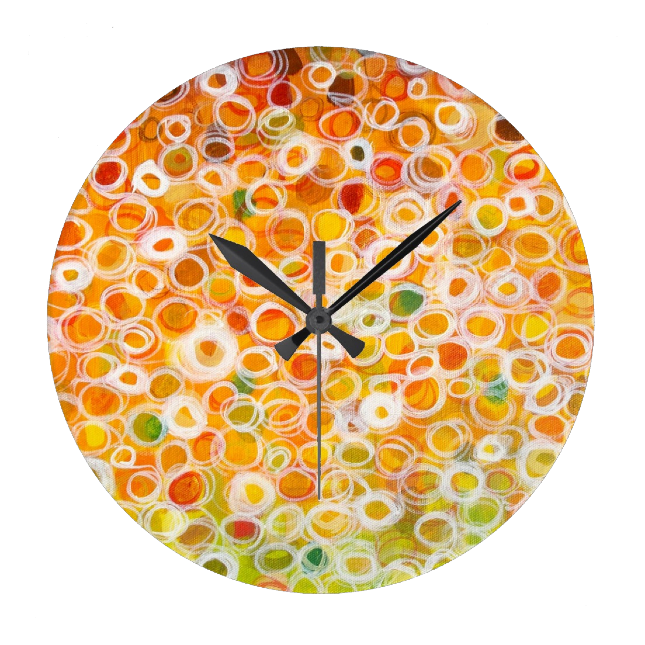
http://www.zazzle.com/autumns_approach_abstract_circles_fall_colors_clock-256494798404800030

When a fellow artist friend visited me in my studio last summer, he asked, "What do you do in the winter?". My reply was something snarky and self deprecating. If I had to guess, "Hibernate and wallow" was the exact response. 

The truth is, there is never any lack of work to be done. When you sell online and promote yourself as a self representing artist, the list of new sites to update, new tricks of the trade, and the ever changing environment of selling/promoting online can keep you so busy you may consider cloning yourself (but I wouldn't advise it, watch Multiplicity if you don't believe me).

With that being said, I've got a list of things I've been up to that I'd like to share, and I could really gab about each one at length but I'll try and be as brief and succinct as possible because, you know, time is precious and all that. (ETA: Brevity is not my forte - see below).


Facebook - I think I figured out the best way to utilize my art page JUST as everything was about to change (exposure of posts has been limited as they are encouraging more paid posts, aka "boosts", from pages). If I had clued in about a year or so ago, who knows what it could have done for exposure/sales, but alas, it is what it is. We only have the now to work with, right?

That being said, I greatly increased the number of likes on my page by doing a few simple things. First of all, I made it a New Year's resolution to only give myself a little time in the morning and at night to look at my "regular" facebook feed - if any time at all. As anyone on facebook knows, it is so easy to discover you've just spent an hour looking at pictures, following links to stories to read, or watching videos that make you laugh. And hey, there's nothing wrong with that! But for me, it was an easy distraction through the day that took me away from my work. When you are your own boss, it's easy to let things like that slide but, again, there are only so many hours in the day. Cutting back on "regular" facebook time was also for my own mental well being. I began to realize how depressed it could make me or anxious/enraged depending on my mood (and what might be happening in the world at any given moment). 

Focusing on my art page, I began to like more pages as my art page, therefore giving me a feed that was nothing but art... what a refreshing change! Now I look at facebook and comment/like in a totally different way. Not as Jessica liking her friend's picture of a recently devoured dish of crème brûlée (as scrumptious as it may appear to be), but as Jessica "the artist" liking and sharing pictures of fellow artists from all over the world. This has led to making new connections with other creators and entering into dialogues about my favorite subject... ART!

Also - and this seems so simple, because it is - the more frequently you post, the more action you'll see happening on your page. That's pretty much the case with every site out there across the board. A "no duh" observation? Maybe. But hey, it took me long enough to catch on to the obvious, maybe it can help a reader or two as well.

My final note on this is that I am still always tempted to bounce back onto my regular facebook account to see what people are up to, some days more than others. But on the whole I have a new attitude about using facebook, and it means a lot more art time every day, which has been great.


Pinterest - I'll admit, I really didn't "get" Pinterest at first. My husband still doesn't and probably never will. (He's the first person to support and cheer me on in my work, but you should see his eyes glaze over when I excitedly show him a new board. Just. Doesn't. Get it.)

The way I look at Pinterest now, and have begun to see the whole world of presenting yourself online, is that it is a reflection of your unique aesthetic, interests and abilities. Yes, Pinterest is a great tool for promoting your own work, but if that's all you do there, you may not get many followers. Creating new boards that are AUTHENTICALLY interesting to you (more on that later) is where it is at. For me, I feel like I have different versions of myself that are side by side, just as real and "me" from one to the next. One version of myself would ideally live somewhere tropical by the sea, wearing flowing white dresses and turquoise jewelry, barefoot 24/7. Thus, Coastal Style and Coastal Home were created. Another version of me lives in a funky, artsy house wearing colorful fashion that screams "I'm an artiste!". I also could see myself in a chic NYC loft, or a country cottage with a kitchen garden outside, or a rustic, natural home in the woods. None of that may sound like it has much to do with art per say, but they each have a unique, true-to-me aesthetic. Most importantly, it's something that I get real enjoyment from, and so finding the time (and items to pin) to make these boards interesting is genuinely FUN for me.

As for art, well that's what 90% or so of what my pinning is about. I do pin my original work, reproductions, etc, but my Contemporary Art board of other artist's work gets a ton of action regularly and is my most popular board, not surprisingly. As with my other boards, I don't pin anything and everything that could possibly fit. I only pin images that I truly love and connect with. That makes my board something unique amongst the plethora of other boards out there about art, painting, abstract art, etc. because no one has exactly the same tastes as I do (Or you! Just think about that for a moment and begin to see the real value it has!)  I also enjoy pinning work of great artists in history that I admire, and images of where artists work.  

Once I shifted my perspective from "how can I use this to make me sales" to "how can I use this to present my unique perspective and aesthetic as an artist and a 'taste-maker'", everything changed. That's when the world of Pinterest really opened up for me and things took off from there. In the process, this genuine content sharing leads to views and possible sales for my own work, so, in a roundabout way, I've ended up accomplishing my original hope for the site - getting views and sales!  

Twitter - For a long time Twitter was simply the dumping ground for any content I shared online. Post a new pic on Tumblr or my facebook page? Off to Twitter it goes. I didn't pay attention to it, I didn't think of it as its own entity, I just let it fly. If someone followed me, I most likely followed back. I never spent any time there, so who cares who I add/follow? 

Well, I am in the midst of changing all that. First of all, the ability to upload pictures makes the experience of using Twitter SO much more enjoyable when it comes to following and sharing artist's work (let alone your own). It's all about a visual experience when it comes to sharing your artistic vision, so a bunch of images rather than verbal soundbites are much more interesting/engaging. Second of all, in the process of discovering new artists and interesting people to follow, I'm also unfollowing a lot that have no use for me. (That sounds harsh but clearly I mean me personally, not that they have no use at all... ok... you get it). By selectively choosing who to follow, it makes the experience of Twitter a lot more enjoyable and engaging. If I follow you, it's because I am genuinely interested in what you have to share and/or say rather than hoping to have an "I'll pat your back if you pat mine" relationship. I think the former has a lot more value ultimately. Which leads me to my final point about all of this social networking...


AUTHENTICITY

For a long time, I did whatever I could do to promote my work, get seen, get sales, etc. Sometimes it felt right, a lot of times it felt like desperate scrambling or clawing at any nibble of potential. I am so over that way of looking at my work and the world of social networking. I don't think it actually serves anyone to create or share something that isn't truly of interest to them. To boil it down... create what you want deep in your heart to create. Share what genuinely interests or excites you. Otherwise, what's the point? If you don't honestly care or feel passionate about something, why would anyone else? 

With that in mind, the next piece of this puzzle fits together and comes about rather effortlessly. 


SYNERGY

Maybe that's not exactly the right word for it, but what I'd like to convey here is the potential of utilizing interconnected content across many different platforms. (Whoa... that was a mouthful.) In simpler terms, and as an example, I could easily go on a pinning binge sharing unique artwork I discover one after another, being led down a rabbit hole of new boards to explore, and more and more art to gaze upon. Once I come up for air from that, I can go back and copy/paste the names of each new artist I've pinned on Facebook, adding their pages (if they have one) and in some cases, sharing an image I find particularly striking on their page. Or when I'm on Etsy, I look at my favorites now purely as curating. What would I genuinely wish to offer customers if I owned my own dream gift shop/gallery? Or how would I stage a fabulous beach home, or arrange a fashion spread in an niche catalog? Once again, I look at "favoriting" as another opportunity to reflect my aesthetic authentically. In the process of discovering artists/shops that strike my fancy, I can follow them on Facebook or Twitter and/or pin something I love. You see what I mean? It becomes a dance between these various sites, a "synergistic swirl" if you will, and when done organically and sincerely, it's actually quite a lot of fun as well as SERIOUSLY inspiring. There is no lack of value in that department.


-------------------

Now that I've shared all that, guess what? There is SO MUCH MORE WORK TO BE DONE! But as far as understanding and best utilizing these three sites - for now - I think I've got a pretty solid system worked out that is going to work for me. And really, that's the advice that I've give to anyone . Do this stuff if you actually like it, find a way to make it work uniquely and sincerely for you, and if you just don't enjoy it, no matter what, then don't do it! It's not worth your time. Speaking of... someone's got to cook dinner and that someone is me. 


Friday, October 08, 2010

Tips for Selling Art on Etsy

Since starting on Etsy in 2006 with my first art shop, livefunky, I've been asked by many artists how to best sell their art on Etsy. After writing a lengthy reply to the most recent request, I decided to edit it my response for a general audience and share my suggestions and advice here. Some of this will be already well known by seasoned Etsians, but for new sellers and artists, this is the ground work information that will help you get your work to be seen and ideally selling!

EDITED TO ADD October 1. 2012: What you need to know about selling on Etsy is that Etsy is ever changing. All of my advice doesn't necessarily apply one day to the next. Take this all with a grain of salt, and then go to the forums and find teams that can help you with what's current on Etsy.

1. Shop Info & Appearance
https://www.etsy.com/your/shops/username

Your shop title should include keywords that people would use to find your shop. For example, mine is "Original Abstract Paintings Fine Art by Jessica Torrant". Including your name is a good idea for artists along with keywords about the style, medium or any other defining features of your work. Next is your description. You can keep it simple, but again think about the words that will act as keywords. Something like "Welcome to my gallery of original abstract paintings by John Doe. I work in oil on canvas and ship worldwide." What I have is "Original Modern Art abstract paintings by Jessica Torrant. Acrylic and mixed media on canvas." So my shop will come up like this in Google searches.

Original Abstract Paintings Fine Art by Jessica Torrant by JessicaTorrant
Original Modern Art abstract paintings by Jessica Torrant. Acrylic and mixed media on canvas.


I want my name, modern art, fine art, abstract paintings, original paintings, acrylic, mixed media and canvas as my keywords, so I've worked them into a couple of relatively cohesive and brief sentences. What would your ideal buyer type into Google to find what you make? Those are the keywords you want to have in your shop title and description.

Your banner should be crisp and clear and lure buyers in, not overwhelm them. If you're not comfortable with graphic design, there are many graphic designers that sell them on Etsy pre-made and also make custom banners for a relatively inexpensive rate.


2. Profile
http://www.etsy.com/public_profile.php

The first thing to add is an avatar. There are varying opinions on this to either add one of your products or a picture of yourself. I happen to like pictures of the artist when it's a visual artist. If you frequent the forums and post in them, a picture of one of your paintings would be better because it could make someone curious to click on it, leading them to your shop. If you don't frequent the forums, I'd go with a picture of yourself. In the end, it's really up to personal preference.

Next up is to write your profile. You can either write a loose paragraph about who you are, what you do and why you do it/how you came to start making art, what you love about making art, etc. or you can write out a full artist statement and bio. The approach is up to you, but having something in your profile allows buyers to get to know the human being behind the shop which increases buying confidence.


3. Policies
https://www.etsy.com/your/shops/username/policies

Filling out your policy section is another thing that can help gain buyer confidence. I won't comment on what to write - that's up to you. Your return policy, shipping methods and other information is all personal to your preference, just be sure to fill out this area.

4. Titles
http://www.etsy.com/storque/search/title/seo/

The link above is to articles about SEO (search engine optimization). There is a lot of helpful information about how to utilize all the keywords buyers would use to find your work throughout your shop description, listing titles and descriptions.

Starting with your titles, flush them out with relevant keywords relating to what you're selling such as "original abstract painting", "original figure study", "original landscape oil painting". You can also include large, big or huge if it's a large painting. Also, if you're including the artwork dimensions, I would take away the word "inches" because it takes up valuable space. Instead, I would just write 18x24 or whatever it is because it's assumed it's in inches. In the description you can include inches or " and you might also want to consider adding the metric dimensions for international buyers.

Here are some examples of titles I could use for Beloved.

-Original abstract texture painting on 12x12 canvas - BELOVED
-Beloved by Jessica Torrant - original abstract painting 12x12
-Square abstract painting acrylic on canvas - Beloved

Whatever the major features of what you're selling may be - be it the style, medium, surface or technique - include that in the title.


5. Descriptions

Fleshing out your listing descriptions is key. Before I got into the groove of writing my own, I looked at a lot of other artist's listings to see examples of how people are doing it. Everybody's different, so you can pick and choose elements that you like (but don't copy - obviously). I tend to have a general description that I copy and paste to save me time and just edit what needs to be edited (like size, title, etc). Also, the first couple of lines of your description are included in Google searches, so having keywords in the first few lines is important. You can see when you are writing the description how much will show up in Google searches. Etsy has this feature right under where you enter the description.

How you express yourself and phrase your description is up to you, but a full description of what you are selling is important. What is it, does it have a name, how was it made, what materials, what are the dimensions, who made it and when, is it framed/unframed/ready to hang or something else, prominent colors, inspiration, how will it be shipped, when will it be shipped? The list goes on and on as to what you can share, just be sure to at least include the basics. I like to include a "return to shop" link at the end of the listing just in case someone stumbles on it and isn't familiar with Etsy and don't know how to return to a shop or that there even is a whole shop behind that one listing.


6. Pictures

Pictures are your number one selling tool. The clearer, crisper and more true-to-life they are, the better. It's best to try and fill as many photos as Etsy allows. Close ups, side shots, images of it hanging in a room or on your easel. You can buy a stock photo of an interior online (usually under $4) and use that image to paste your paintings into it making it look like your painting is hanging in a room. One thing I've heard as a complaint to this is when people make an 8" x 10" (for example) look huge in the staged photo, so try and keep it to approximate scale. Do a search on Etsy to see how other artists are displaying their work, including centering it on backgrounds from solid black to fading backgrounds. There are a lot of ways to present yourself, the important thing is to start with good, clear pictures. Remember the the first picture will be the one that customers will see in your shop and in searches. Make that the best one and absolutely identifiable of what it is.

Some DON'Ts:

-Don't show evidence of flash.
-Don't photograph with a distracting background (aka leaning against your car in the driveway or propped on a kitchen chair with your kid drawing on the wall in the background, though that would be fun to see.)
-Don't choose blurry pictures.

Some possible DOs:

-Pose with your painting.
-Show it hanging in a gallery, if it ever has or is.
-In the studio as a finished piece or work in progress.


7. Shipping

Consider offering international shipping. You can even have a high estimate for shipping to "everywhere else" and write in your listing descriptions something like I have "I ship worldwide with insurance. If I have over estimated the shipping fees, I will refund you the difference once it's been shipped." This just opens you up to all of the international buyers that are looking at the site. Also, write about how your items will be shipped, where to and when in the description.


8. Tags

Choosing the right tags is essential. Since this is written primarily for visual artists, you're going to obviously start with art. Odds are the list of suggested tags below art will reveal something that relates to what you're selling be it painting, drawing, sculpture, etc. Click on any of the tags that relate to what you're selling. If you're not selling an original painting, don't add it as a tag (even if it's a print OF an original painting, buyers are turned off when they see reproductions in a search for original art). Other possible tags to include are the subject matter (floral, landscape, abstract), the medium (oil, acrylic, watercolor), the size (small, large, huge), the colors (peach, turquoise, brown), the style (modern, impressionist, realism), and your name. If you join any teams, they may have tags you can add as well.


9. Getting lost in the sea.

Tags and keywords are important to exposure and people finding you, but another important thing is to remain relevant. This means either listing new work (and I do advise the more the merrier!) or re-listing existing items. This brings you to the top of the heap so to speak. Some people look at re-listing as an advertising tool. For 20 cents they can push their item forward to the cherished first few pages of a search. If it's been a month since you last listed or re-listed something, that means you are buried on the 20th or 40th page - it could be 100's of pages deep depending on the search.


10. Having a lot to offer.

Be it prints and originals, or a range of sizes of original art, the more you have in your shop, the more chances you have to be seen and, in turn, for people to buy. I've had artists with five paintings in their shop ask me what they can do to improve their shop and the first thing I think is add more work. People like options and having a range of prices helps as well. Maybe they fell in love with your large, $2,500 painting but can't afford it so they buy a small piece instead. You don't need dozens of pages of listings, but it just make sense that the more you offer, the more potential you have to sell something.


11. Promotion

This one is really up to you and how much effort/time you want to devote to outside promotion. Having a website or a blog, using social media like twitter and facebook, joining artist sites and sharing your portfolio with links to your shop, are all options for you along with others. You can also advertise, but I like to take advantage of as many of the free options as I can and invest in more art supplies. :) It is only as time consuming as you want it to be, but the more you get your name/shop/link/art out there, the more people will start to pick up on it and share it with other people.


12. Proofreading

My husband is a writer and we help to proofread for each other. If you have someone to check out your listings, shop profile - anything you've written - and check for grammatical errors or spelling errors, that can make a world of difference. It amazes me how much I miss when I write. I can have some glaring errors and I just read right over them!


13. Networking

Get to know more about Etsy by familiarizing yourself with others that are selling there. You can join teams, read the blog, and follow other artist's blogs.


14. Understand it may not happen overnight

Selling art can be a challenge and don't expect success to happen overnight (though who knows, it's always possible!). It takes work and patience, the latter being something that has continually challenged me. Especially when you are new to Etsy, it may take a while to get those first few sales and much desired positive feedback. Of course, if you find that Etsy just doesn't jive with you or you find a more desirable venue to sell your work you should move along, but don't give up if it's just been a month and you haven't had a sale yet. It does take time, but the more you weave yourself into the network, the web of Etsy, the more things will pick up steam.


Additional Etsy DOs and DON'Ts

-DO respond politely and quickly to any emails you get from customers or potential customers.

-DON'T spam - aka drop your shop link in a blog comment or an unrelated forum thread. Also, don't contact people that have added you or one of your items as a favorite. This is also considered spam. If you add a customer's email to a mailing list without their permission, that's a big no-no.

-DO let your personality shine.

-DON'T act unprofessional, rude, insulting, defensive, desperate, begging, or arrogant - pretty much the obvious - don't be a jerk.

-DO present your work in a way that makes YOU want to buy it. Sell it, baby! Work that art!


This is just the tip of the iceberg and if I think of anything else, I'll add to the post.

Please comment with any of your suggestions, your experience on Etsy, or other DOs and DON'Ts. Thanks for reading!

- Jessica
http://www.etsy.com/shop/jessicatorrant